Transform Your Designs: The Power of Abstract Luxury
We have all been there. You are working on a project, whether it is a social media campaign, a digital art piece, or a high-end invitation, and the design is technically correct but emotionally flat. The layout is clean, the typography is sharp, but it lacks that specific atmosphere—that "something extra" that separates standard content from professional work. Often, the missing ingredient isn't a new font or a different filter; it is the foundation. This is where the Magical Luxury Abstract Backgrounds collection comes in, offering a solution that goes beyond simple decoration to become a fundamental design asset.
Defining the Visual Language of Luxury
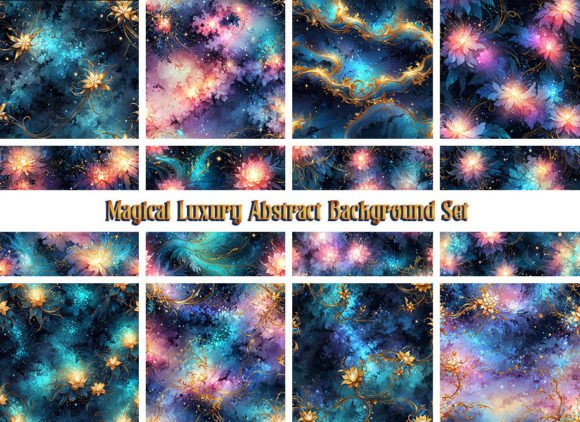
When we talk about "luxury" in design, it is rarely about being loud. It is about texture, depth, and a specific kind of visual weight. The Magical Luxury Abstract Backgrounds collection captures this perfectly. These are not just random blobs of color; they are carefully curated compositions that mimic the fluidity of ink, the shimmer of metallic foils, and the complexity of high-end marble. They possess a personality that is both modern and timeless. The style leans heavily into rich, saturated hues and intricate layering, providing a backdrop that feels expensive and polished without distracting from your main content.
The appeal of these backgrounds lies in their versatility as a design asset. Unlike a busy photograph that ties your project to a specific location or subject, abstract backgrounds provide a mood. They can feel ethereal and dreamy, bold and aggressive, or sleek and sophisticated depending on the colors you select and how you overlay your text. For designers and brand strategists, this is invaluable. You can maintain a consistent brand identity across various platforms while simply swapping out the background texture to match the specific emotion of a campaign.
Practical Applications: From Screen to Print
The true test of any design asset is how well it performs across different mediums. Because these files are delivered as high-resolution PNGs—specifically 3500 x 3500px at 300 DPI—they are built for professional versatility. This is not just for web use; these are print-ready assets. Whether you are designing a hero image for a website landing page, a backdrop for a podcast cover, or the cover of a physical booklet, the resolution holds up.
For entrepreneurs and small business owners, these backgrounds are a secret weapon for branding. Imagine you are launching a new product line. Instead of hiring a photographer for an elaborate studio shoot just to get a textured background, you can use these abstracts to create cohesive packaging design mockups. They work exceptionally well behind product photography, adding a splash of color and context that makes the product pop. Similarly, for those in the publishing world, such as bloggers or magazine editors, these files are perfect for editorial design. They can serve as a full-bleed background for a feature article or a subtle textural element in a sidebar, helping to guide the reader’s eye and establish a visual hierarchy.
Enhancing Visual Hierarchy and Audience Engagement
One of the most common mistakes in graphic design is the battle between the background and the foreground. If the background is too chaotic, your message gets lost. If it is too plain, the design feels sterile. Magical Luxury Abstract Backgrounds solve this by offering a dynamic yet balanced visual field. Because the shapes are soft and fluid, they naturally create areas of high and low contrast. This allows you to place your typography strategically.
For instance, if you are using a bold display font for a headline, you can position it over a darker, more shadowed area of the abstract background to ensure maximum readability. Conversely, lighter, more delicate script fonts or handwritten fonts can float over the more vibrant, lighter sections of the image. This interplay influences the user's engagement; the eye is drawn to the text, but the brain registers the richness of the background, creating a subconscious association between your brand and quality.
Strategic Selection and Integration
When incorporating these assets into your workflow, it is helpful to think like a brand strategist rather than just a decorator. Here is how to get the most out of the collection:
- Evaluate the Color Palette: Do not just pick the prettiest image. Look at the hex codes within the background and ensure they complement your existing brand identity. If your brand uses cool blues and greys, look for the abstracts in that family to maintain consistency.
- Test Your Typography: These backgrounds are dense. They generally pair best with clean, legible typefaces. A heavy serif font or a geometric sans serif font often stands up best against the complexity of the abstract art. Avoid overly ornate fonts that might get tangled visually with the background textures.
- Consider the "Negative Space": Even abstract art has composition. Look for the areas within the 3500 x 3500px canvas that offer a bit of breathing room. Placing your logo or a call-to-action button in these slightly calmer zones ensures it doesn't compete for attention.
- Commercial Usage: Always be mindful of licensing. Since these are intended for a wide range of uses—from digital art to physical invitations—ensure your usage aligns with the provided terms. This is particularly important if you are creating items for resale, such as printed planners or merchandise.
Real-World Design Scenarios
To visualize the utility, consider a few specific scenarios. A social media manager could use these backgrounds to create a series of Instagram Stories that feel cohesive yet varied. By using different abstract backgrounds from the same collection for different days of the week, they maintain a high-end aesthetic while keeping the content fresh. For a wedding stationer, these images are perfect for creating digital invitations that feel textured and bespoke, far superior to a flat digital color fill.
Ultimately, Magical Luxury Abstract Backgrounds are about elevating the baseline of your design work. They provide that "premium font" equivalent for your imagery—assets that instantly upgrade the perception of your project. By integrating these thoughtfully, you move your work from looking "homemade" to looking "handcrafted" by a professional.